Top 10 Mistakes Homeowners Make When Leasing Their Home
BORN PROPERTY MANAGEMENT Landlord Education Series | San Mateo County & Greater Bay Area
Across the Bay Area, thousands of homeowners attempt to lease their properties on their own every year. The appeal is understandable — why pay a management fee when you can post a listing yourself? But California's landlord-tenant laws are notoriously intricate, and even well-intentioned landlords regularly expose themselves to serious legal and financial risk simply by missing a procedural step or using an outdated form. The ten issues below represent the most common — and most costly — mistakes we see.
MISTAKE #1 — IGNORING CALIFORNIA'S NEW SECURITY DEPOSIT LIMITS (AB 12):
This is one of the most common — and costly — errors right now. Under AB 12, which took effect July 1, 2024, the maximum security deposit for nearly all residential rentals in California is now one month's rent, regardless of whether the unit is furnished. This is a significant reduction from what was previously allowed. Collecting even a dollar over the legal limit can trigger legal action: tenants may sue for a refund of the excess amount, plus attorney fees, and statutory penalties can reach three times the deposit amount. Many homeowners who set their deposit amounts before this law took effect are still in violation today — without realizing it.
MISTAKE #2 — USING AN OUTDATED AGREEMENT:
A handshake agreement or an old lease template from the internet is not a legal strategy — it is a liability. Verbal leases create ambiguity around nearly every term: rent amount, due date, pet policies, maintenance responsibilities, and notice requirements. Outdated written leases carry a different risk: they may include clauses that were once legal but are now unenforceable, or omit disclosures that California now requires. When disputes arise, these gaps give tenants leverage — and judges little choice but to side against the landlord. The consequences can include rejected rent increases, unenforceable eviction notices, and costly lawsuits.
MISTAKE #3 — FAILING TO DOCUMENT THE PROPERTY WITH PHOTOS (AB 2801) Risk Level: NEW LAW — EFFECTIVE JULY 1, 2025
As of July 1, 2025, AB 2801 is fully in effect — and it fundamentally changes how move-in and move-out documentation must work. California now requires landlords to take timestamped photos at three distinct points: before the tenant takes possession, at move-out before any cleaning or repairs begin, and again after all work is completed. Those photos must then be provided to the tenant. Skip this process — or do it out of order — and you may forfeit your right to make any deductions from the security deposit, no matter how legitimate the damage. This procedural requirement catches many experienced landlords off
MISTAKE #4 — MISHANDLING THE SECURITY DEPOSIT RETURN:
The rules around returning security deposits are strict, and mistakes are expensive. Common violations include: 1.) Missing the 21-day deadline. California requires the deposit itemization to be sent within 21 days of move-out — even if repair work isn't finished yet. If work is still ongoing, a preliminary itemization is due within 21 days, followed by a final accounting with receipts and photos once repairs are complete. 2.) Charging for normal wear and tear. Faded paint, minor scuffs, and carpet worn from normal use are not deductible — but many landlords try. This is one of the most litigated issues in California small claims court. 3.) Using the deposit as last month's rent. This is not permitted unless the lease explicitly states it in writing — and even then, it creates complications at move-out.
MISTAKE #5 — PRICING RENT WITHOUT UNDERSTANDING RENT CONTROL LIMITS:
California's AB 1482 (the Tenant Protection Act) limits annual rent increases to a maximum of 5% plus local CPI, or 10% — whichever is lower — for covered units. For the period from August 2025 through July 2026, that ceiling varies by county: Riverside is capped at 7.5%, Orange County at 8%, and Santa Ana at just 3% (unless the property was built within the last 15 years). Many Bay Area cities layer additional local controls on top of state law. Raising rent above the applicable cap — even accidentally, even by a small amount — can result in the increase being voided, back rent owed to the tenant, and significant legal liability. Knowing which cap applies to your specific property requires more than a quick Google search.
MISTAKE #6 — SKIPPING THOROUGH, DOCUMENTED TENANT SCREENING:
With security deposits now capped at one month's rent under AB 12, the quality of your tenant selection has never mattered more. A problem tenant can cause damage that far exceeds what you can recover. Yet many self-managing landlords skip formal screening entirely — relying on instinct or a brief conversation instead of verifiable data. A documented screening process — credit check, employment and income verification, rental history, and references — protects you in two ways. First, it helps you identify reliable tenants. Second, it creates a paper trail that demonstrates your selection decisions were based on legitimate, consistent criteria rather than anything that could be construed as discrimination. Without documentation, even a good-faith decision can look like a fair housing violation.
MISTAKE #7 — VIOLATING FAIR HOUSING LAWS:
Fair housing violations don't always happen in obvious ways. An offhand comment to a prospective tenant, a poorly worded listing description, or a screening criterion that disproportionately excludes a protected class can all trigger a complaint — even if no discriminatory intent was present. Federal fair housing law protects race, religion, national origin, sex, familial status, and disability. California goes further, also protecting source of income (including Section 8 vouchers), marital status, sexual orientation, gender identity, age, and more. A landlord who refuses to consider an applicant with a housing voucher, for example, may be in violation of state law — even if the decision feels financially prudent. The exposure is significant: fair housing complaints can result in financial penalties, mandatory training, and costly settlements.
MISTAKE #8 — IGNORING LOCAL ORDINANCES ON TOP OF STATE LAW:
One of the most common misconceptions among Bay Area landlords is that California state law is all they need to follow. In reality, many cities in the region have enacted additional tenant protections that go substantially further than state law. In Oakland, for instance, every rent increase notice must be accompanied by the Rent Adjustment Program (RAP) Notice, delivered in English, Spanish, and Chinese. San Francisco, Berkeley, and other cities have their own just-cause eviction requirements, relocation assistance obligations, and notice rules that differ from state defaults. Failing to comply with local ordinances — even while following state law perfectly — can render notices void, expose landlords to tenant lawsuits, and complicate or prevent evictions entirely.
MISTAKE #9 — ENTERING THE PROPERTY WITHOUT PROPER NOTICE:
A rental unit is a tenant's home, and California law treats it as such. Landlords generally must provide at least 24 hours' written notice before entering — for inspections, repairs, showings, or any other reason. Emergencies are the only exception. Entering without proper notice, showing up repeatedly without cause, or using access as a way to pressure a tenant can constitute unlawful entry or, in more serious cases, harassment. Tenants who feel their right to quiet enjoyment is being violated have legal remedies — including the right to sue for damages and, in some cases, to terminate the tenancy. It is also important to note that California strictly prohibits retaliation. A landlord cannot issue a notice, raise rent, or reduce services in response to a tenant exercising their legal rights — such as reporting a code violation to a city agency.
MISTAKE #10 — NEGLECTING PROPERTY MAINTENANCE AND HABITABILITY STANDARDS:
California law gives tenants powerful tools when a landlord fails to maintain a livable property. If conditions fall below the legal habitability standard — covering plumbing, heat, weatherproofing, pest control, structural safety, and more — tenants have the right to withhold rent, make repairs themselves and deduct the cost from rent, report the landlord to the city, or sue. Many first-time landlords are genuinely surprised by these remedies. They assume that as the property owner, they control the timeline for repairs. California law says otherwise. Beyond legal compliance, deferred maintenance is also simply bad business: small issues compound into major repair bills, tenant turnover increases, and property values erode. Regular inspections — conducted properly and with proper notice — are one of the most cost-effective things a landlord can do.
MISTAKE #11 — GAPS IN MARKETING STRATEGY AND LOW-QUALITY LISTING PRESENTATION:
The way a property is presented online determines the quality and quantity of applicants who come through the door. Yet many self-managing landlords post a handful of dim, cluttered smartphone photos — toilets left open, personal belongings piled throughout, unflattering angles — and wonder why they're attracting limited interest or below-market applicants. Professional photography and video are not a luxury; they are a competitive necessity in the Bay Area rental market. Born Property Management lists every property we manage across the top 12 rental platforms, paired with professional photography and video that highlight each home's best features, standout amenities, and unique appeal. A strong digital presence doesn't just fill vacancies faster — it attracts higher-quality tenants who are willing to pay market-rate or above. Savvy landlords also know to lean into the specifics: if your property is located near a top-rated school district, that detail belongs front and center in your listing. Parents consistently prioritize educational quality when choosing where to rent, and properties near high-performing schools command measurably stronger demand. Researching local school performance metrics — test scores, graduation rates, teacher-to-student ratios — and weaving them into your marketing can meaningfully widen your applicant pool.
MISTAKE #12 — FAILING TO OPTIMIZE THE PROPERTY BEFORE LISTING:
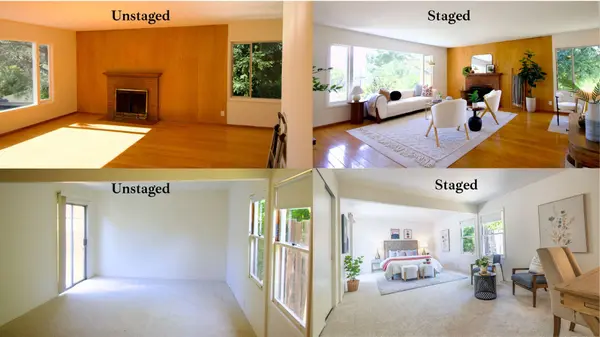
One of the most overlooked opportunities in DIY property management is the period before the listing goes live. Many homeowners simply post the property as-is without asking a critical question: what small investments would allow this home to lease at the top of its fair market range? The answer is often more accessible than owners expect. Modern, in-unit laundry is consistently one of the highest-demand amenities among Bay Area renters — tenants frequently accept a higher monthly rent in exchange for avoiding shared or off-site laundry. Updated kitchen appliances, fresh paint in neutral tones, and well-maintained landscaping all signal that a property is well cared for, which attracts quality tenants and justifies stronger rental pricing. If a yard is part of the offering, the lease should clearly define whether maintenance is included — tenants view a well-kept outdoor space as a premium amenity, and it can justify a meaningfully higher asking rent. A professional property manager can walk through your home and identify exactly which repairs or modest upgrades will move the needle on rent, and which are unnecessary expenses.
MISTAKE #13 — NOT CONDUCTING REGULAR PROPERTY INSPECTIONS:
Many self-managing landlords either don't know they are legally permitted to conduct routine interior and exterior inspections, or they avoid doing so to preserve goodwill with their tenant. Both are costly mistakes. Regular inspections — conducted with proper notice — are one of the most effective tools a landlord has for protecting their asset. A timely inspection can catch a slow leak before it becomes a mold problem, identify unauthorized occupants or pets, verify that lease terms are being followed, and surface maintenance issues while they are still inexpensive to address. Small problems found early cost a fraction of what they cost when discovered late. Documented inspections also create a paper trail that is invaluable if a dispute ever arises over the condition of the property at move-out. Without a record of the property's state during the tenancy, a landlord's ability to justify deposit deductions — or pursue further damages — is significantly weakened.
MISTAKE #14 — MISHANDLING PET POLICIES AND EMOTIONAL SUPPORT ANIMALS:
Many self-managing landlords either don't know they are legally permitted to conduct routine interior and exterior inspections, or they avoid doing so to preserve goodwill with their tenant. Both are costly mistakes. Regular inspections — conducted with proper notice — are one of the most effective tools a landlord has for protecting their asset. A timely inspection can catch a slow leak before it becomes a mold problem, identify unauthorized occupants or pets, verify that lease terms are being followed, and surface maintenance issues while they are still inexpensive to address. Small problems found early cost a fraction of what they cost when discovered late. Documented inspections also create a paper trail that is invaluable if a dispute ever arises over the condition of the property at move-out. Without a record of the property's state during the tenancy, a landlord's ability to justify deposit deductions — or pursue further damages — is significantly weakened.
MISTAKE #15 — FAILING TO KEEP RENTS COMPETITIVE WITH CURRENT MARKET VALUES:
Self-managing landlords frequently leave money on the table in one of two ways: they either never increase rent at all (often out of discomfort or uncertainty about the rules), or they raise it too aggressively without understanding the legal limits — triggering the exact liability outlined in Mistake #5. Knowing what rent your property should command right now requires genuine local market knowledge — not just a glance at Zillow. Rental rates in the Bay Area shift with economic conditions, neighborhood dynamics, new supply, and seasonal demand patterns. A licensed property manager with deep local knowledge tracks these variables continuously and can advise you on both the optimal asking rent for a new tenancy and the appropriate — and legally compliant — increase amount when renewing. Underpricing your rental is a permanent loss. Unlike a price increase that can be applied at the next lease renewal (within legal limits), below-market rent for even one tenancy represents income that can never be recovered. Over the course of a year, a $200/month underpriced unit costs a landlord $2,400. Over a multi-year tenancy, the impact is substantial.
MISTAKE #16 — HIRING UNLICENSED OR UNINSURED SERVICE PROVIDERS:
When something needs to be fixed at a rental property, the instinct of many self-managing landlords is to find whoever is cheapest and fastest. That instinct, while understandable, can create serious legal and financial exposure. Hiring a contractor who is not properly licensed and insured means that if they damage the property, cause a secondary issue, or are injured on-site, the liability can fall squarely on the property owner. California requires contractors to be licensed through the Contractors State License Board (CSLB) for work above $500. Engaging unlicensed workers for covered work is itself a legal violation — and if that worker is injured on your property, you may be treated as their employer under state law, with all the liability that entails. Born Property Management maintains a vetted network of over 250 licensed and insured contractors operating throughout San Mateo County. Importantly, we have no in-house service providers and receive no kickbacks from steering owners toward specific vendors — a conflict of interest that is common at other property management firms. Every recommendation we make is driven entirely by quality, fair pricing, and your best interest. We solicit competitive bids, handle vendor payments directly through your owner portal, and welcome owners to use their own preferred vendors — as long as they are licensed and insured.
THE BOTTOM LINE:
California's rental laws have never been more complex — or more rigorously enforced. The ten issues above represent just a fraction of what landlords must navigate: fair housing compliance, proper advertising language, legally required disclosures, just-cause eviction rules, security deposit procedures, and much more. Many of these laws are genuinely counterintuitive, and violations can occur long before a lease is ever signed — starting with how you word your listing ad. The smartest move a Bay Area homeowner can make is to partner with a professional property management company that knows this landscape inside and out. Born Property Management has spent over 24 years handling every aspect of the landlord-tenant relationship in San Mateo County and the greater Bay Area. We manage the entire process from start to finish: listing and marketing your property, communicating with prospective tenants in full compliance with fair housing law, conducting thorough and documented tenant screening, preparing legally current leases, handling move-in and move-out documentation, collecting rent, coordinating maintenance, and staying current on every change to state and local law so you don't have to. We are proud members of the National Association of Residential Property Managers (NARPM) and our track record speaks for itself. We have a Average 14-day turnaround from listing to signed lease, 24/7 Maintenance Hotline — you'll never receive a late-night call, Near-zero eviction rate: only 1 eviction in the last 14 years, our average tenant stay of 4.5 years through our Active Lease Renewals Program, and as supply Proactive Emergency Readiness Plans for all tenants.
The day-to-day responsibilities of being a landlord are time-consuming enough. The legal complexity of doing it correctly in California is another matter entirely. Let the professionals who have been doing this for over two decades handle the details — and protect yourself from the risks that come with going it alone.
To learn more about how Born Property Management can help, contact us today for a free consultation.
Zachary Wooster
DRE# 02249351
zack@bornre.com
650-229-8529
Born Property Management | San Mateo County & Greater Bay Area bornpropertymanagement.com
This article is for educational purposes only and does not constitute legal advice. For matters specific to your property, please consult a licensed California attorney.
Born Property Management CA LIC 02002900
Categories
Recent Posts